Your risks, your controls, your audits. Connected, from the field to the Executive Committee.
Health and safety, environment, Sapin II: when they are tracked across spreadsheets, emails and shared drives, follow-up becomes fragmented. A shared framework brings them together, so you can manage risk instead of being at its mercy.
Every risk, control and obligation can be tied to the same framework. No more conflicting versions across departments.
Every team contributes to the same risk map. Weak signals become easier to spot, before they turn into problems.
From the field to the Executive Committee, data is consolidated, up to date and shared. Everyone talks about the same risk, at the same time.
Every control, every action and every incident is tracked in one place. Evidence is available when you need to present it, whether during an audit or a control review.
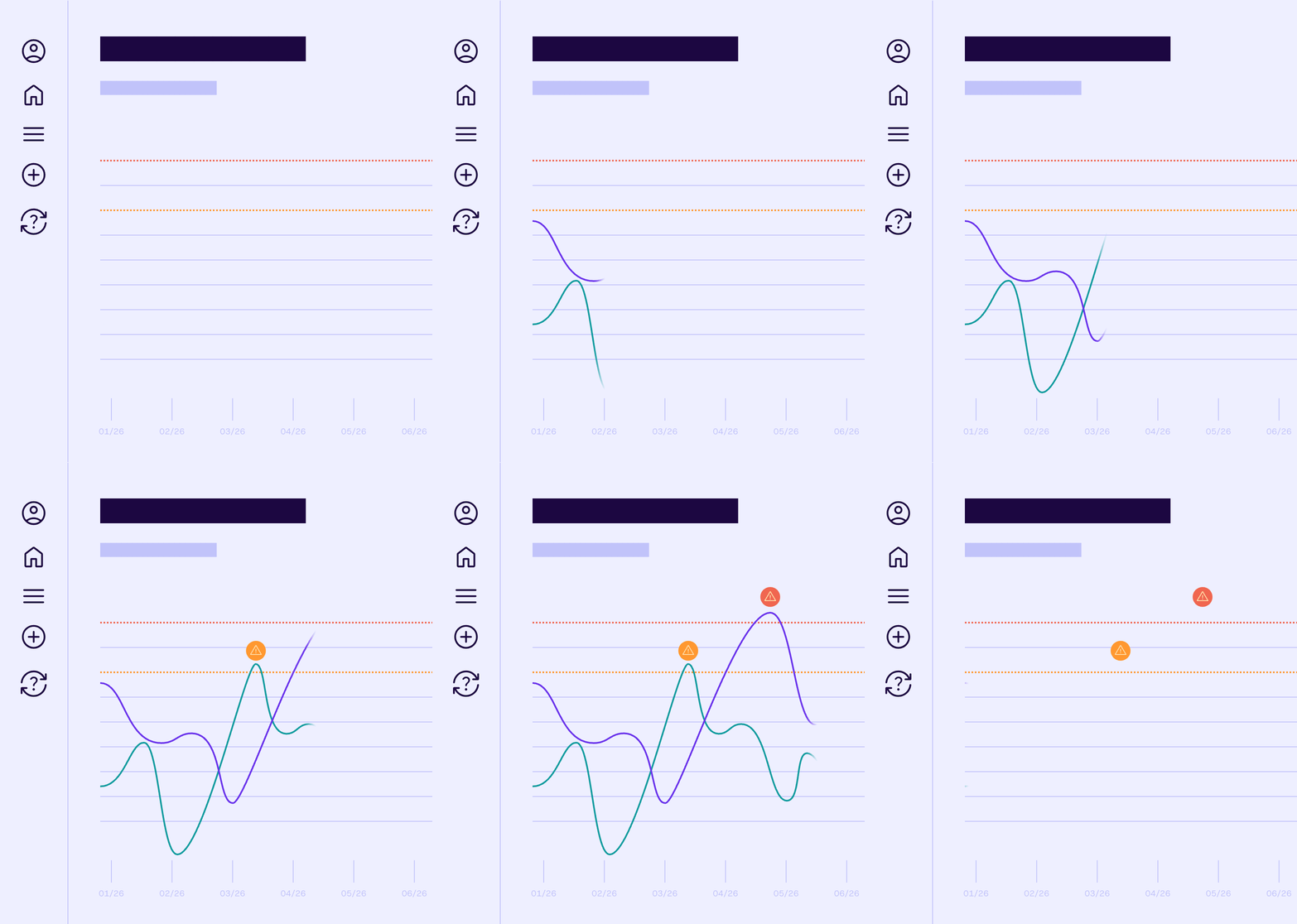
One shared framework, from the field to the Executive Committee.
Each module stays autonomous, but all share the same foundation. An incident updates the risk map. A control informs the audit. Data flows without re-keying. First line, second line, internal audit: three roles, one shared source of information.
From mid-sized companies to large corporations. They manage their risks with Delta RM.


Manage your risks, your controls and your audits. In a single platform.
Built with risk professionals, for daily use. Each function keeps its specific requirements while sharing a common framework.
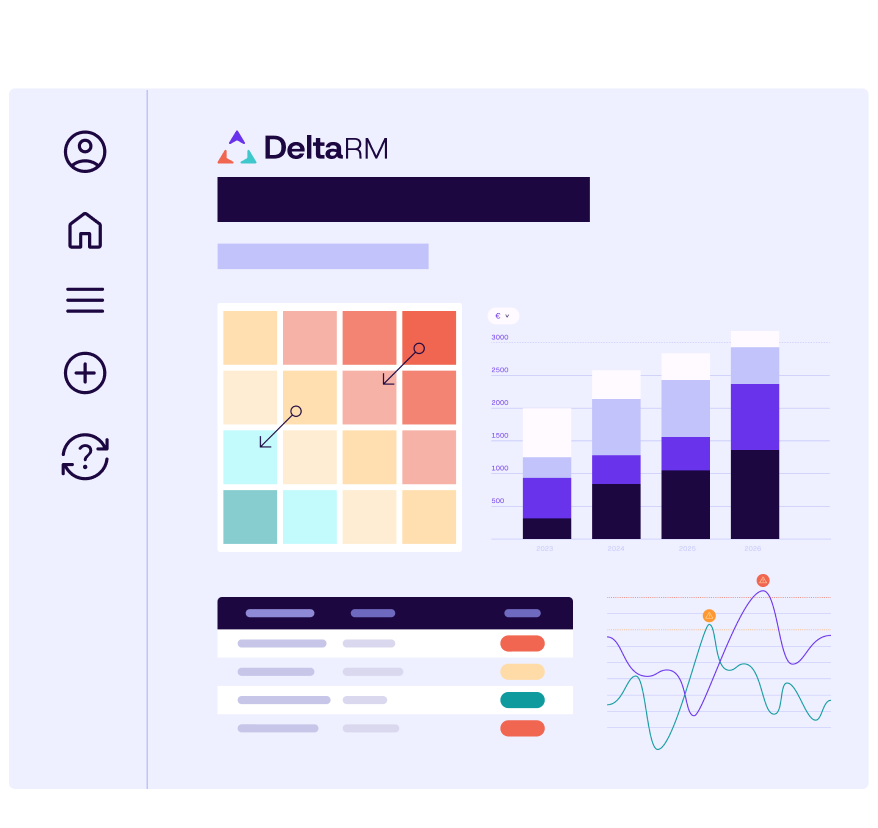
From risk mapping to steering, in a single tool.
From risk mapping to board reporting, everything rests on the same framework. Your teams contribute, control is demonstrated by facts, leadership decides with full visibility.
Visualize all your risks on a continuously updated criticality matrix. Filter by entity, process, risk category, or residual exposure level. Export in one click for your Executive Committee.
Formalize each control: define the objective, design it, set the scope, plan the frequency and link it to its risks, processes and regulatory requirements. One shared framework for the whole organization.
Document each visit with photos and attachments. Results are available in real time by site, subsidiary or region. Share them directly with your insurers.
Build your annual plan based on your risk mapping, control results, and recurring incidents. Each audit engagement is justified and validated.
Report directly from the incident. Link each claim to its policy by type, risk category, or year. Automatically calculate your loss ratios by entity, branch, or insurer.
Upload your supporting documents: the AI agent analyzes their completeness and consistency, then scores each control. It identifies missing documents, detects inconsistencies across files and generates a compliance report ready to share. You make the final scoring decision.
How we structure your GRC program.
In 3 steps.
Expert Scoping
We challenge the brief: we help you define the scope, assessment criteria and taxonomies before we configure the platform. We know risk management from the inside.
Collaborative Rollout
We bring your teams on board: from scoping and configuration to training and go-live, we're there at every step. We stay with you until your teams have fully adopted the platform.
Continuous Monitoring
Your GRC program evolves over time: we help you refine it, enrich your data and demonstrate the value of GRC to the Executive Committee.
Start with one module.
Activate the others at your own pace.
That's collective GRC.
An incident linked to its risk. A control linked to its evidence. An audit informed by both.
Everything is connected.
Connect your KRIs to your mapped risks. When an indicator exceeds its threshold, the associated risk is automatically re-evaluated.
Prioritize your engagements in the most critical risk areas. Each audit updates your risk profile and closes the loop between exposure and control.
Policies, claims, insurable value collection and loss ratio, linked to your risks. Report a claim directly from an incident, without re-entering data.
Formalize your first- and second-line controls from your mapped risks. Measure the gap between gross and net risk.
They consolidate their risk map with Delta RM.
Risk teams who rely on each entity's assessments to build a comprehensive risk map.
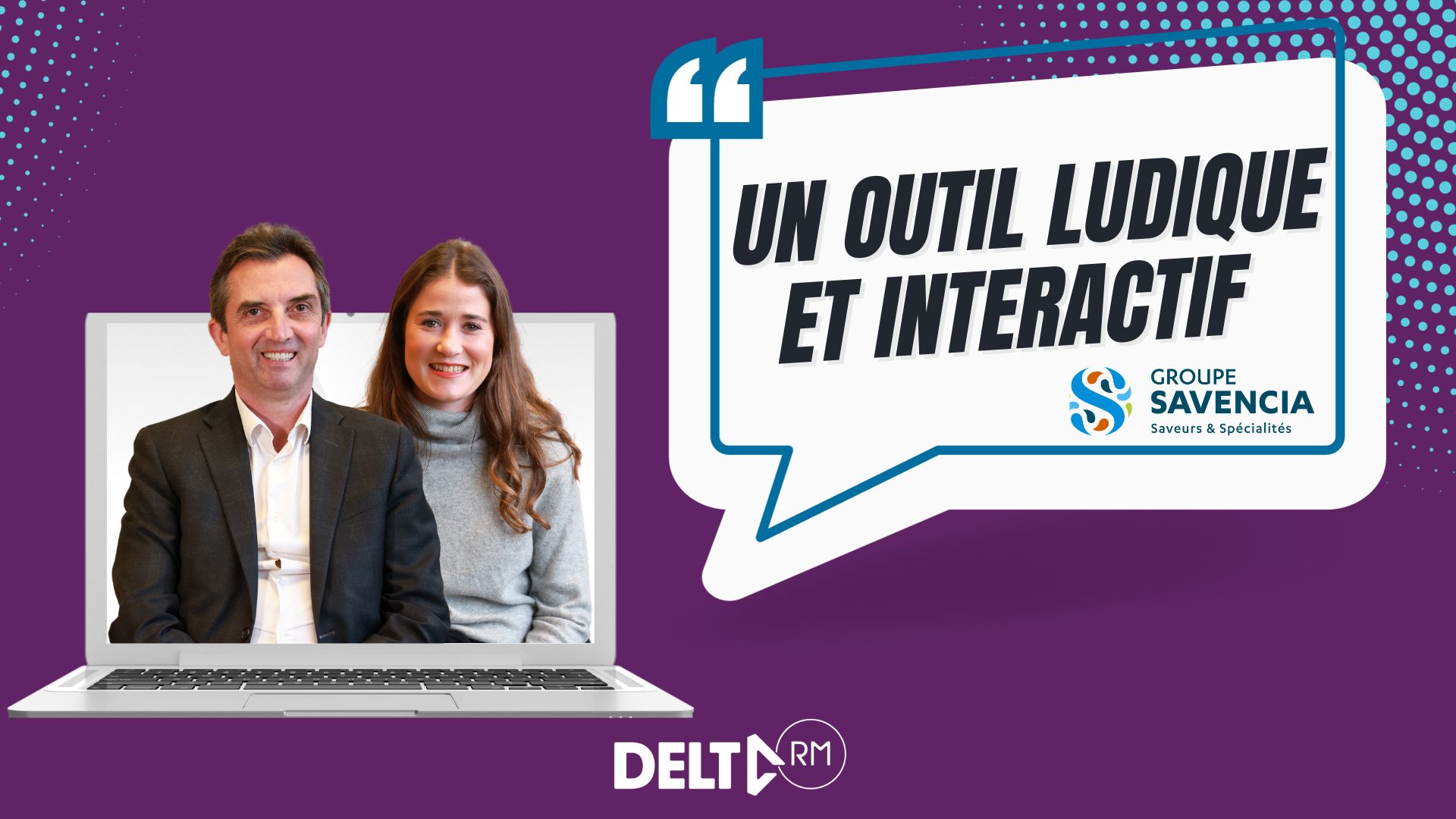
SAVENCIA case study: a fun and interactive tool
The SAVENCIA project team shares their insights with you; the risk team has adopted our tool to consolidate a comprehensive risk map based on assessments from their entities.
Industrial (international food group) Independent family-owned group, operating in 120 countries (dairy products, chocolate, charcuterie, and seafood)
SAVENCIA case study: a fun and interactive tool
The SAVENCIA project team shares their insights with you; the risk team has adopted our tool to consolidate a comprehensive risk map based on assessments from their entities.
Industrial (international food group) Independent family-owned group, operating in 120 countries (dairy products, chocolate, charcuterie, and seafood)
Frequently asked questions from risk teams in the industrial sector
The questions risk, insurance and EHS teams ask before choosing their GRC software.
SIGR (the French term for a risk management information system), GRC (Governance, Risk & Compliance), eGRC and IRM are closely related terms for the same family of platforms, which centralize risks, controls, compliance and audit. For your insurance programs, Delta RM also acts as an RMIS. For an industrial group, it brings risk mapping, internal control, audit, risk prevention, insurance and incidents together on one platform.
By linking risk prevention and insurance to a shared risk framework: site visits, recommendations, incidents, claims and action plans are all tied to it. All teams work from that framework, structured around your reference standards (ISO 45001 and ISO 14001 for risk prevention), and reporting is consolidated without re-keying.
Delta RM is framework-agnostic: its configurable structure can be adapted to ISO 31000, COSO, ISO 45001, ISO 14001 or Sapin II. In practice, you link your risks, controls, action plans and evidence to your applicable requirements. The platform is not meant to "make you compliant": it makes work, controls and evidence easier to trace, without replacing the company's own responsibility.
Yes. Each entity manages its own scope, with group-level consolidation. The hierarchy goes up to 8 levels and access rights are granular: the group Risk Manager sees a cross-entity consolidation, while a subsidiary sees only its own scope.
No. Delta RM comes with unlimited users. You pay for the platform, not for each employee. It's a deliberate choice: collective GRC cannot be held back by per-user billing.
Yes. Each site visit recommendation generates an action plan with an owner and a deadline. Each incident is linked to its risk, and the corresponding claim can be reported directly from the incident, without re-entering data.
Yes. Data is hosted in France on Scaleway's European cloud infrastructure. The Delta RM platform is ISO/IEC 27001 certified and its hosting is SecNumCloud-qualified. Delta RM is an independent software vendor.
Is a feature missing from your system?
Our roadmap is built with you. You express a need. If it's shared, it becomes a product priority.