
Choosing a tool, scoping a project, getting your teams on board: internal audit digitalization rarely fails because of technology. It fails because of the questions that weren't asked early enough.
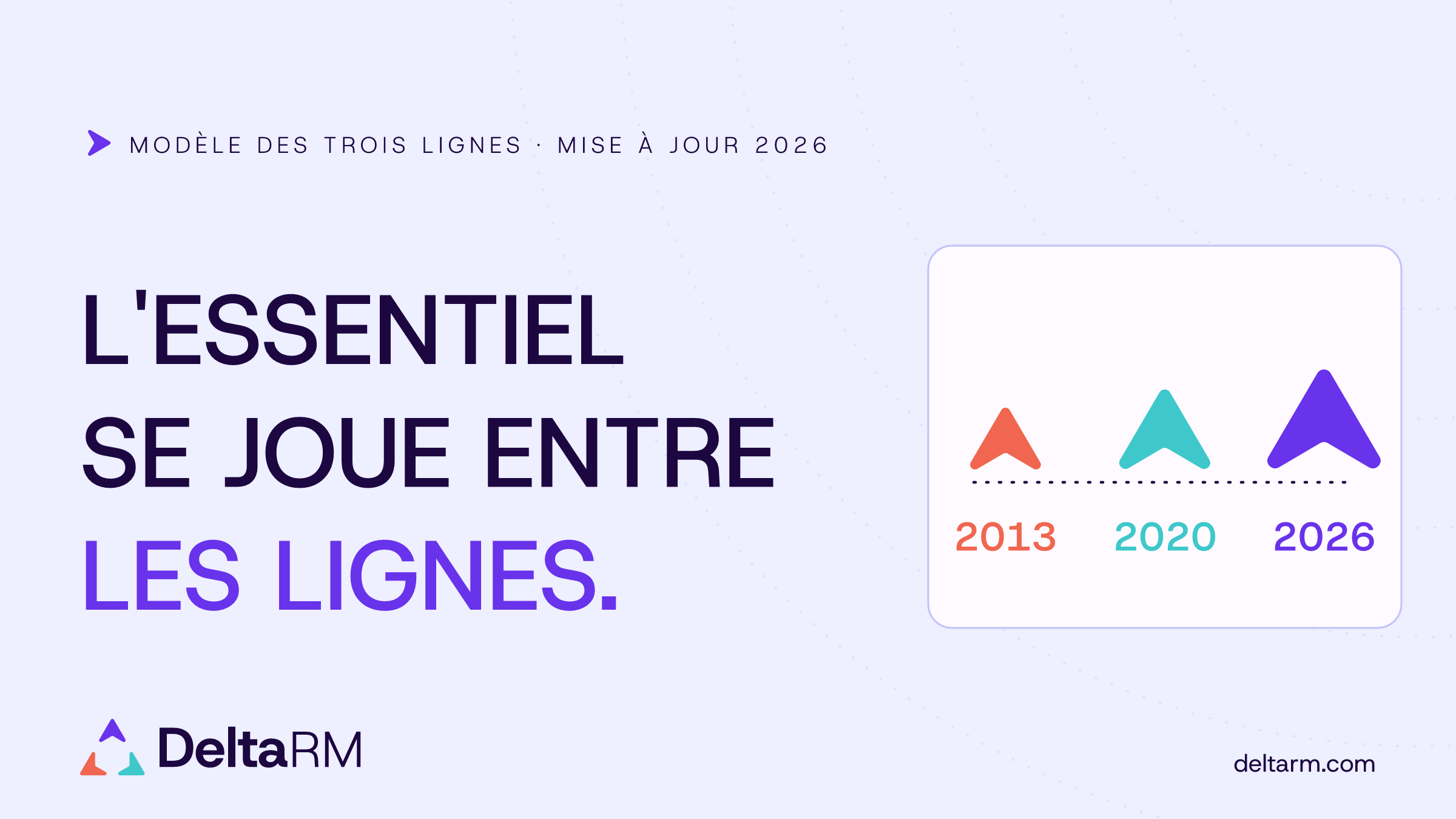
On March 24, 2026, Delta RM co-hosted an IFACI (IIA France) webinar with EY and Ingena. The result: a guide featuring 9 practical fact sheets, organized into three stages (before, during, after), to scope, secure, and sustain your project. Download it at the bottom of the page.
🤝 A working group, not a vendor pitch
This guide didn't come from a marketing department. It was produced by an IFACI working group: two GRC software vendors, two integration firms, and twenty auditors from various sectors and countries.
Every question was debated, challenged, and collectively validated. The result doesn't sell a solution: it equips you to make a decision. It is our firm belief that risk is only a threat to those who face it alone.
🗺️ Before, during, after: the 3 stages of a project that lasts
The guide follows the actual lifecycle of a project.
- Before: prepare and structure. Why digitalize, and for what objectives? What is the scope (audit plan, workflows, testing, reporting)? What is the budget and the expected ROI? Which sponsors and stakeholders (CEO, CIO, procurement, legal) should be brought on board from the start?
- During: selection and security. SaaS or on-premise? Can the tool be configured independently? Does it support multiple methodologies (COSO, ISO, Three Lines of Defense)? How is AI integrated, and how is data siloed? And the most underestimated factor: data migration.
- After: long-term sustainability. Who administers the tool? How are version updates, support, and renewals managed? Success is measured years after go-live, not on the day of deployment.
💡 What this means for your risk management department
Mid-sized companies and large corporations face the same trap: a project that goes off the rails due to a lack of scoping. In a mid-sized company, the risk department has 2 to 5 people: there is no room for a deployment that drags on. In a large listed group, the challenge shifts: multiple entities, heterogeneous methodologies, and stakeholders to align.
Delta RM addresses both: unlimited users to get everyone on board from the field to the Executive Committee without worrying about licenses, support for multiple methodologies without rigid frameworks, and a platform built by risk professionals who practiced the trade before building tools for it.
At Kering, the collection of insurable values went from 2 months to 3 weeks. At Savencia (€5.7B in revenue, 24,000 employees, 120 countries), risks are consolidated at every level of the group.
The guide asks the right questions. Our approach helps you answer them without leaving you on your own.
❓ Frequently asked questions
What is an RMIS (or GRC tool)?
An RMIS (Risk Management Information System) centralizes risk and control repositories, assessments, action plans, and reporting. GRC, IRM, RMIS, and eGRC refer to the same family of tools depending on the market. For internal audit, it manages the audit plan, documents work, and tracks recommendations.
How long does it take to deploy a GRC tool dedicated to audit?
3 to 6 months on average according to the IFACI guide, depending on the scope and technology. A phased implementation is recommended to capitalize quickly on initial feedback.
SaaS or on-premise: which should you choose?
SaaS reduces technical costs and facilitates updates; on-premise strengthens hosting control but requires internal resources. In both cases, compliance (GDPR, ISO 27001, SOC 2) is a key factor in the decision.
How do you measure the ROI of a digital audit project?
KPIs measured before and after: average time per audit, number of audits per year, percentage of recommendations implemented on time, and report production time.